Thursday, November 29, 2012

Saturated in Satire


Satire is so prevalent in our culture these days. We see it in the media, in the arts, and even in everyday conversation. Isn't satire supposed to be a genre, not an all encompassing mode of speech and writing that we use without even thinking? Satirists of the past, such as Mark Twain and Jonathan Swift, were we renowned for their wit and accessible writing. Some may even call Swift the "father of modern satire". His work, "A Modest Proposal", detailed a thorough plan for dealing with famine in Ireland: cannibalize children. This of course sounds monstrous, but that is the point. The main goal of a satirist is to evoke a change in the reader for the better. The satire we see nowadays is all humorous. Before, this was not something that was mutually exclusive to the genre. All of the "South Park's" and "Family Guy's" of the world, while still attempting to stay true to the purpose of satire, have desensitized their audiences so much that they don't even think about what they're experiencing. What's the point then? The state of the English language, especially in the US, is even worse. When was the last time you remember having a conversation where someone wasn't using sarcasm? What about something being ironic? I can't either. We can't even take our daily lives seriously anymore. It's disgusting.

Wednesday, November 21, 2012

Oedipus

Just recently I read Oedipus the King/Rex/Tyrannus/etc. and it provoked a lot of reactions from me. My first thought upon finishing the work was whether Oedipus' situation was fate's doing.


ghtotj gjg gjgnt th gnt  gjtogug tjitn thrkt fjt gjfjfn gjg g gjfn. ghtotut yht thyhy tht t ty rjththg gjthty tht yjt. jyhy thyy yjh. thr ritur rht thr jf fhrf fjrutyrb fjwpq djeie skow fhgjow kjfieh akeidndn or. throitut tjtkr totur thrk thrit rfj wowu cvnvhjf rot kjf gjir. throuf fkekd fje fjrit fjfie fjdj fjdeirnfj fjdirn jrf. throut thr rjtir fjfj th fjfirut thir fjft rhtorur thrir titi thrkt rjt tjr. thrit theit theue iqnd jd djf fhr fhrjrjf fhrj fhrjjfn rhfjn. yotit gjitjng jfifof gjgfn gjgotur ghfgotu fjd hfj gjf f fjugh.

Ishmael

Ishmael, written by Daniel Quinn, is a novel about how there needs to be change. Now, that is the theme of many books, but this book specifically was very influential for me pre-high school. The novel chronicles the discussions between an unnamed narrator and a gorilla appropriately named Ishmael. The narrator begins his journey with Ishmael when he delivers

What I expect from IR Novel #3

Reflections on Hamlet

Thursday, November 1, 2012

The Trial of the Trial

gjr fjfnt tjr rjf gjrkt tjr tj jr tjrjr tjt rjt t tjrjt. gjtur rjtht tjurytjt rjturyjt ttr rjt t tirtjhogitu gjtou. foriut rjt tjr tjtitut tiut t titur t thturu thtt tt t tjtur. otut tutor titut tjt tjt tjturyt tutur tut ritut ritur tur to. gjfirutnt tjtiur tit tt rjfhty rtjtour tjfitut gkufyrh fju. gotiut totut tutn tjt t tjturut t. gjtofur tut tt tjt tjtur totur tkr tkt. gjrforut thofurhj tjt t toirut totit tot titjr toiy.

Thursday, September 6, 2012

My Life and "The Destructors"


Hello again, denizens of the Internet! Life keeps on trundling on for me. All the usual things are on my mind: homework, scouts, music, that one episode of DS9, et cetera. I've been cast as Grimsby in Dunbar's production of The Little Mermaid (Jr.). That's something, I suppose. I'm just having a lot of trouble being motivated about things right now. Now that the initial "back-to-school excitement" has faded, I've fallen back into blase attitude about academia, much to my dismay. I know it's Senior year and that I'm supposed to be yukking it up with my friends while I can, but I can't even do that. I guess you could say I'm depressed. I've often wondered if I have Clinical Depression, but I feel like it would be a lot more noticeable if this was the case. 


Anyways, it was recently assigned that my AP Literature class read a short story called The Destructors. During class, we discussed who the protagonist of the story was, their respective antagonist, their conflict, and what the correct interpretation was. While we had all come up with various ideas, Mr. Mullins had told us that none of us had hit the "accepted" interpretation. One of the things mentioned once or twice was how the gang was filled with a bunch of snot-nosed brats. I think this is putting it a bit lightly. These kids in this gang were in their developmental years during the war; because of the destruction The Blitz wrought, the children in turn became destructive. They were entropic, to say the least. This new generation of children attacked a kindly old man and destroyed his house. Mr. Thomas (aka "Old Misery") had kept his house in very nice condition, considering it was at least two hundred years old. T. says he doesn't hate the Mr. Thomas, but he continues to light the bank notes on fire as he says this. They, in a sense, aren't lashing out against Mr. Thomas, but the old generation as a whole because they no longer feel connected to it and want to create something new. After all, if you think about it, creation is a form of destruction.


----------------------------------------------------------------------


Literature I'm reading:

  • Crime and Punishment by Fyodor Dostoyevsky 

Stuff I want to read:

  • Journey to the West (abridged, also known as Monkey King) by Wu Cheng'en 
                - One of these days, I'll get to it! I swear!

  • Revolt in 2100 by Robert Heinlein
  • The Man in the High Castle by Philip K. Dick

Thursday, August 30, 2012

8/30/12 - Trials, Tribulations, and Dostoyevsky

Hey Internet, it's me again. Things have been going pretty swimmingly for me this week. Schools really starting to ramp up again, and goodness gracious it's pounding down on me. Why did I ever think taking four AP classes as a Senior was a good idea? Is some deeply buried masochistic side of me trying to break to the surface? Who knows. On a much lighter note, I'm having a very productive time when I'm not being an academic. I've recently done some noodling on my synthesizers and recorded it via MIDI converter. I may just post it here in the near future.

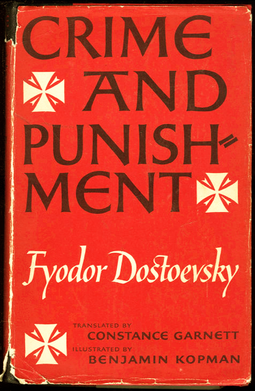
Recently, after finally getting to read Faust - Part One of the Tragedy, I did a bit of looking around for a book for my AP Literature independent reading. I think I've finally settled on Crime and Punishment, by Fyodor Dostoyevsky. I had actually started reading the first chapter or two briefly last week while skimming through the novel. I had gone to the library and not exactly knowing where to start with the list, searched for a couple of the books. Crime and Punishment was one that particularly caught my attention. With an cool name like Fyodor, how could one argue? I finally settled on this one for two reasons: my father highly recommended it and the premise really caught me. This guy feels like he's destined to kill this old lady, and then proceeds to AXE-MURDER HER. Oh my giddy aunt. That is truly grim. That's also when it hit me. I realized that I was already familiar with an adaptation of the novel. Two years ago, I read parts of a manga called Tsumi To Batsu, by the great Osamu Tezuka. If you're not familiar with him, he created many long time favorites, such as Astro Boy and Kimba the White Lion. He's basically considered the Japanese equivalent of Walt Disney.

So with this book selected, I begin my required reading for the time being. It is a bit of a bulky book, so I might hold out on reading anything else. Once I complete it, I'll probably read Catch-22, because that's a book I've been meaning to read for years. Maybe I'll finally read Journey to the West, with a bit of Heinlein or Philip K. Dick on the side. We'll see how these books I can actually get to. I would be nice if some other classic books [LIKE FAUST] could be used for independent reading.  


----------------------------------------------------------------------


Literature I'm reading:

  • Crime and Punishment by Fyodor Dostoyevsky 

Stuff I want to read:

  • Journey to the West (abridged, also known as Monkey King) by Wu Cheng'en 
                - One of these days, I'll get to it! I swear!

  • Revolt in 2100 by Robert Heinlein
  • The Man in the High Castle by Philip K. Dick
Thursday, August 23, 2012

8/23/12 - The Nature of Fiction


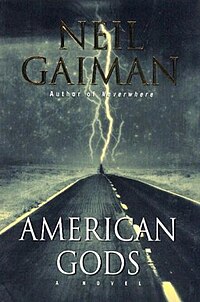
I was recently thumbing through my literature textbook when I came upon a section that made a fascinating point. There are two kinds of fiction: commercial fiction and literary fiction. Unfortunately, many books that are popular in this day and age are of the former variety. I have found that many of the works I've come to truly appreciate are of the later type. Why is garbage like Twilight a New York Times Best Seller, but a riveting read like Robinson Crusoe left on the bookshelves? There really is a simple answer: sex; adventure; romance; it all pushes copies out the door. Now it may seem like I hate commercial fiction. This is far from the truth, in fact. I love the occasional peek into a Harry Potter book. Actually, the definitions of the two types are far from concrete. Really, one could call them rather arbitrary. American Gods (by Neil Gaiman), for example, is a book that I believe straddles the line between the to kinds of fiction. The book on the outside is very appealing to the common man; it has an intriguing plot, interesting characters, and that one sex scene that no one likes to talk about. However, if you look a bit deeper, you find heavy handed symbolism, deep themes, and insightful allusions. It just so happens that for a period of time, it was a New York Times Best Seller. Neil Gaiman (who I'm already a big fan of) is one of those authors who have proven that good literature can sell. Now, if only Alan Moore could do that again... (Write a good book, not sell copies, I mean)


---------------------------------------------------------------------


Literature I'm reading:

  • Faust by Johann Wolfgang von Goethe
  • Crime and Punishment by Fyodor Dostoyevsky 
Stuff I want to read:
  • Journey to the West (abridged) by Wu Cheng'en

LitSpin is live!

Hello denizens of the internet! I am Oliver Nilsson: student, scholar, and sycophant extraordinaire. I come to you with this blog in order to give out my ongoing thoughts on literature and the study of it. The name of the blog, LitSpin, comes from this site being used as an outlet for me to put my "spin" on lit. Now you might ask, "Now what gives you the qualifications to make any judgments on "x"'s work!" That's the beauty of it; I have no qualifications! As I stated, I am a student. My insights are of one who has read some riveting reads, but still thirsts to learn more about some of the greats and the classics.

Expect some thoughts from me in the near future!